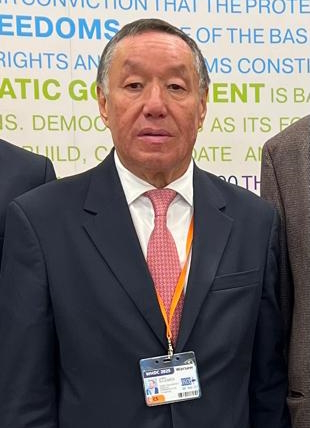
Plenary Session 9: Humanitarian Issues and Other Commitments (Combating Trafficking in Human Beings; Refugee and Displaced Persons)
Combating Trafficking in Human Beings
Kazakhstan is a party to more than 60 multilateral universal human rights treaties, including 13 international conventions, treaties and agreements specifically related to combating modern forms of slavery.
An Inter-Agency Commission on Combating the Illegal Export, Import and Trafficking in Human Beings operates at the national level. In addition, dedicated units have been established within the Ministry of Internal Affairs to address such crimes.
To introduce an effective referral mechanism for victims of human trafficking, victim identification criteria and a standard for the provision of special social services have been developed and adopted.
On refugees
Kazakhstan actively cooperates with international organizations on asylum-related matters, primarily with the Office of the United Nations High Commissioner for Refugees (UNHCR).
At all border crossing points, it is possible to submit a written application for asylum, including in cases of forced illegal border crossing.
Criminal liability for illegal border crossing (Article 392 of the Criminal Code) does not apply to persons persecuted on political, ethnic, or religious grounds, or those facing the risk of torture, on the condition that they voluntarily submit an application for asylum.
Refugees are entitled to targeted social assistance on an equal footing with nationals and may apply for permanent residence and citizenship of Kazakhstan.
Since last year, Kazakhstan has updated its population registration rules. Refugees and asylum seekers are now included in the national registration system and are issued a personal identification number, which significantly improves their access to the labour market. T
This approach reflects the institutional maturity of the state and its alignment with non-discrimination standards promoted by UNHCR.
Kazakhstan is also implementing the provisions of the 1957 Convention on the Nationality of Married Women (ratified in 1999). Under this simplified procedure, around 10 000 people have acquired Kazakhstani citizenship over the past 5 years.
Thus, the de facto openness of borders, rapid legalization procedures, and the integration of refugees and asylum seekers into the national registration system (IIN) together confirm a humane and pragmatic model.
Combating Trafficking in Human Beings
Kazakhstan is a party to more than 60 multilateral universal human rights treaties, including 13 international conventions, treaties and agreements specifically related to combating modern forms of slavery.
An Inter-Agency Commission on Combating the Illegal Export, Import and Trafficking in Human Beings operates at the national level. In addition, dedicated units have been established within the Ministry of Internal Affairs to address such crimes.
To introduce an effective referral mechanism for victims of human trafficking, victim identification criteria and a standard for the provision of special social services have been developed and adopted.
On refugees
Kazakhstan actively cooperates with international organizations on asylum-related matters, primarily with the Office of the United Nations High Commissioner for Refugees (UNHCR).
At all border crossing points, it is possible to submit a written application for asylum, including in cases of forced illegal border crossing.
Criminal liability for illegal border crossing (Article 392 of the Criminal Code) does not apply to persons persecuted on political, ethnic, or religious grounds, or those facing the risk of torture, on the condition that they voluntarily submit an application for asylum.
Refugees are entitled to targeted social assistance on an equal footing with nationals and may apply for permanent residence and citizenship of Kazakhstan.
Since last year, Kazakhstan has updated its population registration rules. Refugees and asylum seekers are now included in the national registration system and are issued a personal identification number, which significantly improves their access to the labour market. T
This approach reflects the institutional maturity of the state and its alignment with non-discrimination standards promoted by UNHCR.
Kazakhstan is also implementing the provisions of the 1957 Convention on the Nationality of Married Women (ratified in 1999). Under this simplified procedure, around 10 000 people have acquired Kazakhstani citizenship over the past 5 years.
Thus, the de facto openness of borders, rapid legalization procedures, and the integration of refugees and asylum seekers into the national registration system (IIN) together confirm a humane and pragmatic model.
