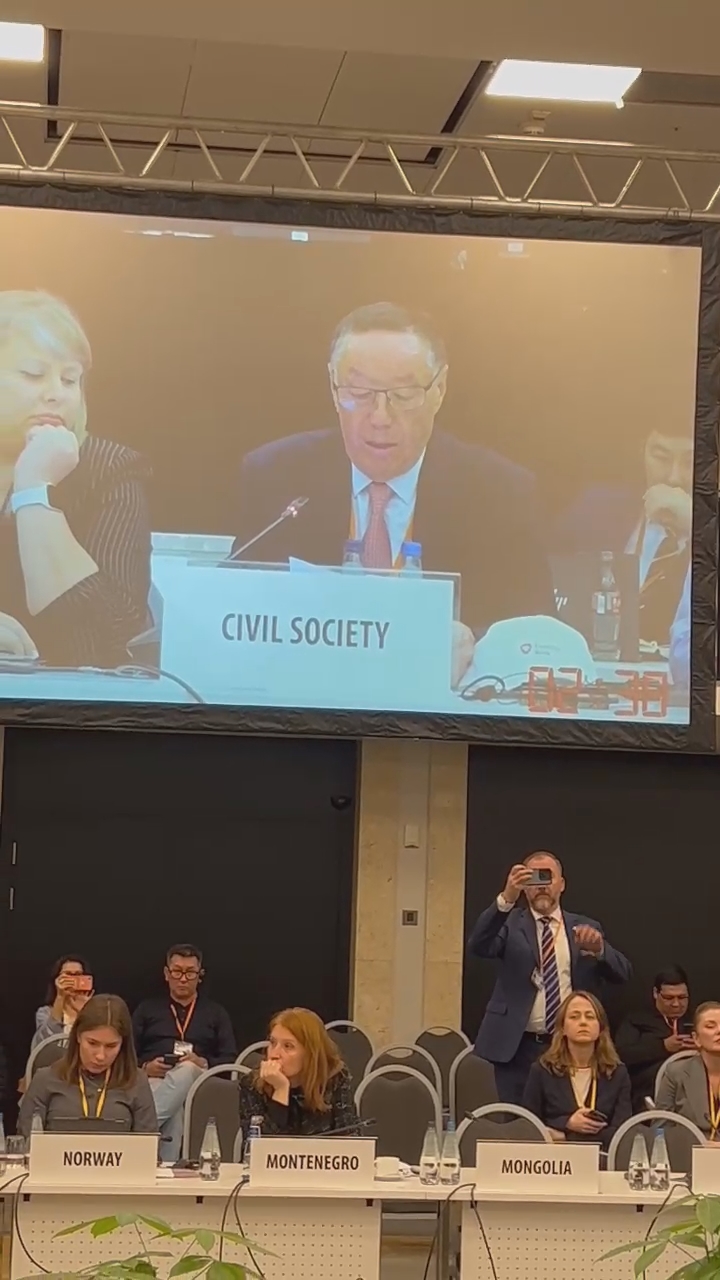
Plenary Session 2: Democratic Institutions (Democracy at the National, Regional, and Local Levels; Democratic Elections)
Kazakhstan has ratified all main international documents in the field of democracy and is firmly carrying out reforms. This is clearly visible in the dynamics of recent years.
First, a single seven-year presidential term has been established.
Second, presidential powers over local governors have been limited, and the quota of presidential appointees in Parliament reduced. Conversely, the powers of Parliament have been significantly expanded.
Amendments to the Constitution were introduced taking into account the opinion of the people, through a referendum, and were supported by almost 80% (77.18%).
Third, public participation in state affairs has greatly increased.
All major national issues are decided through referendum – 4 have been held since independence, including 2 in recent years: in 2022, on constitutional amendments; and in 2024, on the construction of a nuclear power plant.
A parliamentary opposition has been introduced and the threshold for parties to enter Parliament has been reduced from 7% to 5%. The registration threshold for political parties has been reduced four times – from 20,000 to 5,000.
A mixed electoral system has been established, allowing citizens to vote both for party lists and independent candidates, which broadened parliamentary representation. As a result, 6 out of 7 political parties won seats in the most recent elections.
A quota system for women, youth, and persons with disabilities has been introduced.
To enhance local self-governance, district and city governors are now directly elected, and more than 2,500 rural and district akims and 45 city mayors have already been chosen through this process.
Fourth, new guarantees for freedom of expression have been introduced. A notification-based system for public assemblies is now in effect.
A petition mechanism has been launched, significantly expanding civic participation in public decision-making – more than 100 petitions have already been submitted.
The National Kurultai, chaired by the President and bringing together human rights defenders, legal experts, and economists, was established to ensure broad public participation in the reform process.
Fifth, human rights mechanisms have been strengthened: the Constitutional Court was re-established, the status of the Ombudsman enhanced, and courts have become more independent.
Administrative justice is functioning, and from this year separate cassation courts have begun to operate.
Democratic reforms are ongoing. In the future, discussions are underway on transforming the legislative branch, including a possible transition to a unicameral Parliament.
Kazakhstan will continue to strengthen democratic institutions in line with the best international standards.
Kazakhstan has ratified all main international documents in the field of democracy and is firmly carrying out reforms. This is clearly visible in the dynamics of recent years.
First, a single seven-year presidential term has been established.
Second, presidential powers over local governors have been limited, and the quota of presidential appointees in Parliament reduced. Conversely, the powers of Parliament have been significantly expanded.
Amendments to the Constitution were introduced taking into account the opinion of the people, through a referendum, and were supported by almost 80% (77.18%).
Third, public participation in state affairs has greatly increased.
All major national issues are decided through referendum – 4 have been held since independence, including 2 in recent years: in 2022, on constitutional amendments; and in 2024, on the construction of a nuclear power plant.
A parliamentary opposition has been introduced and the threshold for parties to enter Parliament has been reduced from 7% to 5%. The registration threshold for political parties has been reduced four times – from 20,000 to 5,000.
A mixed electoral system has been established, allowing citizens to vote both for party lists and independent candidates, which broadened parliamentary representation. As a result, 6 out of 7 political parties won seats in the most recent elections.
A quota system for women, youth, and persons with disabilities has been introduced.
To enhance local self-governance, district and city governors are now directly elected, and more than 2,500 rural and district akims and 45 city mayors have already been chosen through this process.
Fourth, new guarantees for freedom of expression have been introduced. A notification-based system for public assemblies is now in effect.
A petition mechanism has been launched, significantly expanding civic participation in public decision-making – more than 100 petitions have already been submitted.
The National Kurultai, chaired by the President and bringing together human rights defenders, legal experts, and economists, was established to ensure broad public participation in the reform process.
Fifth, human rights mechanisms have been strengthened: the Constitutional Court was re-established, the status of the Ombudsman enhanced, and courts have become more independent.
Administrative justice is functioning, and from this year separate cassation courts have begun to operate.
Democratic reforms are ongoing. In the future, discussions are underway on transforming the legislative branch, including a possible transition to a unicameral Parliament.
Kazakhstan will continue to strengthen democratic institutions in line with the best international standards.